Category: dealing with grief

  • Grieving the Death of a Sibling – Memories in a Box

    Grieving the death of a sibling can be a heartbreak experience especially when the sibling dies at a young age.

    Guest Post Allison Black

    I remember September 5, 2010 as if it was yesterday. I peeled open my eyes, the celebrations of the night before still fogging my brain. I could hear quiet talking. I rubbed my eyes and saw my roommate on the phone. She hung up. “Get dressed my parents are taking us to lunch.” I rolled out of bed and threw on some clothes. We laughed about the fun we had the night before and thought how satisfying a big lunch sounded. We walked outside. The sky was clear, the air crisp, the sun shining. “It’s gorgeous out!” we exclaimed as we made plans to go for a hike after lunch. 

    Life can change in a minute

    And then we went to lunch and before we even got our meals my life forever changed in the parking lot of an Olive Garden. All our plans, and all the fun we had the night before, it all just seemed so insignificant. This gorgeous, perfect day would forever be remembered as the worst.

    My brother was gone

    My role model, my protector, my confidant, my silly singing-living room wrestler- music-loving- bear hugging big brother was gone. I couldn’t understand it and to say I have learned to understand would be a lie. It still makes no sense how a healthy 27-year-old could lose their life. 

    There is a clear line in my life

    Before Sean died and after he died. The memories from before, they seem so close but also so far out of reach. That innocent girl unaware of such tragedy, that intact family from before- they’re familiar but also vastly different.

    My brother has been dead for almost 9 years. How is that even possible? I must ask myself this question a thousand times a week. They say time heals all wounds. It’s true. I don’t cry myself to sleep anymore. I hardly ever wake up in the middle of the night haunted by the idea that his death was all a dream. And yet, my wound is still there. Sean was a limb I lost, and I am always aware that he used to be here but isn’t anymore. But I’ve learned to live without that limb. I’ve adapted.

    There is life after Sean’s death

    Someone once told me grief is like having a box of memories on a shelf. You’re always aware the box is there. But sometimes you may choose to take the box down and sort through all those memories. Other times, the shelf breaks out of nowhere and the box comes spilling out. I’ve always found solace in that. Sometimes you feel crazy when that shelf breaks. It’s been 9 years and there are days when I feel like I’m right back in that parking lot getting the news. 

    Connection between siblings

    But I always believed that no one will ever know you as well as your siblings. They are the only people who truly know your life, know your story. They are the only people who can relate to growing up in your home, the only people who can hold your childhood memories. Sean knew me. And I knew Sean. I hold his secrets. I share his memories. So it’s no wonder that the shelf has to break sometimes. I lost a piece of my life, my history, one of the two closest persons who will ever truly know me. 

    Death leaves us with questions

    I remember when he first died, I couldn’t imagine a life without him. I couldn’t imagine going on with my life without him. How could I go back to school and focus when “Sean’s Gone” kept echoing in my mind?

    How could I start a career without his wisdom and advice? How could I fall in love with someone who never knew Sean? How could I have children who would never meet him?

    But life kept moving and I found I was able to move with it. I moved home and found strength in the love of my family. I finished school. I fell in love with a man who never knew Sean and yet does his best to get to know him through stories. I started a career and on the toughest days, I hear Sean’s advice and wisdom when I replay old conversations in my mind. And when I have children, they’ll know they have an uncle in heaven who loves them.

    Keeping memories alive

    Every day I know the box is there. And there are days I am mad as hell to know that’s what I have left of him. But for the most part, time is healing my wounds. Life after Sean’s death is different. I am different. And yet, life is good. I am happy. Sean died doing something he loved. He died on a beautiful day. The sun was shining, the air crisp, the sky clear. What a gorgeous day, I had exclaimed. I made plans. Life went on. But, I knew Sean and he knew me. And for that, I will always be grateful. 
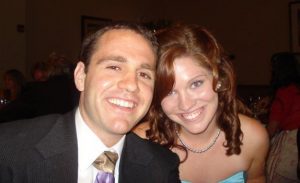
    Allison Black - Sean McCarthy
    Allison Black & her brother Sean McCarthy

    Allison lives in New Jersey with her husband, Joe, and their dog, Odin. She is a first-grade teacher and a board member of The Sean McCarthy Live Passionately Foundation.

  • Coping with Grief Following a Natural Disaster

    Coping with grief following a natural disaster is hard and stressful.

    Picture of Coping With Grief Following a Natural Disaster

    You may associate grief only with the death of a loved one however, many people will have and continue to face grief from natural disasters such as we are experiencing in America with the wildfires and two major hurricanes. We have witnessed not only loss of life but deep grief at the loss of property, pets, jobs and the routine of everyday life.

    When people experience any significant loss, they also experience grief. Grief is as human and inescapable as growing older. Those who experience loss from natural disasters will experience the same stages of grief as from a death.

    Grief is real for those who just lost their home filled with history and memories that washed away, Grief is real when you don’t have a change of clothes, or dry pair of shoes. Grief is real when you don’t have a job to go to because the building is now gone as is the school the kids attend along with the daycare center.

    Fear sets in when you wake up at a shelter or friends not knowing what the day will bring, where you will live and when life will become normal again. These are the same feelings we experience following the death of a loved one.

    I have experienced both. I lost my husband and mother within a month of one another and more recently I lost my home in a fire. I remember leaving my burning house with only the clothes on my back, my purse and my cat. I woke up the next day at my neighbors’ house wondering what was I going to do? Where would I live, how would I do my job as I worked from home? I wondered were all my most precious memories gone?

    I had the same feelings when I woke up after my husband died, after everyone went home and back to their lives wondering how would I survive? What would I do next. How will I get back into a routine and where do I start to rebuild my life?

    Stress Following Disasters

    Each person copes with stress differently following a natural disaster. Some of the signs could include:
    • Difficulty communicating thoughts
    • Difficulty sleeping
    • Difficulty maintaining balance in their lives
    • Low threshold of frustration
    • Increased use of drugs/alcohol
    • Depression, sadness
    • Feelings of hopelessness
    • Mood-swings and easy bouts of crying
    • Overwhelming guilt and self-doubt

    I experienced many of these stressors both following deaths and loss of my home. How we handle the stress I believe will determine our future. I find what has helped me cope and move forward was the support and physical help from family, friends and outsiders who offer assistance.

    In natural disasters, there are so many people that need help but be assured organizations such as the American Red Cross, The Salvation Army, local fire and police all are there to help and to accept their support can take away some of the stress.

    Letting Others In

    In times of natural disasters, you see communities and neighbors pull together – that’s what we do.
    When strangers offer to help, say YES. Accepting help is not a sign of weakness and it is the most loving act we can offer another human being.

    Giving Back

    I have found that people who are grieving the death of a loved one can find purpose again in helping others in their time of need. It takes us outside of ourselves and our own grief even temporarily. I also find that those grieving their own losses can offer more compassionate support because they understand the feelings of loss and therefore can share suffering and hope in a deep and meaningful way. That is healing for the giver and receiver. That is a real gift you have can give someone else and put meaning into your own life.
    So how could you help? Find ways to volunteer and lend a hand up to others during a disaster. Your compassion would make all the difference to someone suffering.

    “No one is useless in this world who lightens the burdens of another.” – Charles Dickens

    The key to healing is working through and past the death or disaster and into a new and hopeful future. It takes time and trust.

    How Can You Help?

    Coping with grief following a natural disaster is hard and stressful and sometimes all we can do is give financial support. I believe giving to trustworthy organizations who are on the ground in the communities is a worthy way to be supportive. You can know many other organizations but here are two:

    American Red Cross Disaster Relief
    Salvation Army Disaster Relief

    picture of JoAnne Funch JoAnne Funch

  • How Expressing My Grief Allowed Me to Move Past It

    By guest author, Ruth Mancini

    I’ve always missed not having a dad.

    My parents separated when I was young, and then when I was 15, my dad was hit by a car and died. There’s always been a gap in my life that could never be filled.

    In the early 1990s I split up from my long term partner and the pain of my father’s death and the loss of that relationship hit me hard all at the same time. A friend once told me, “When something bad happens it drags up everything bad that has ever happened to you” and I think that this is very true. And yet, I didn’t feel I had the right to grieve. I hadn’t had my father nearby for many years and so it wasn’t as though I missed his daily presence as most people do when they lose someone close. But it was painful in a different way. It wasn’t until my partner was gone too that I realized that he had in many ways been a substitute for my father – and a sticking plaster for the wound that I’d been ignoring all my life.

    It was a difficult time.

    I came to question everything in my life: my job, my friends, where I lived. It was as though I had spent my entire life trying to pretend my absent father didn’t matter to me and had carefully crafted an existence that would allow me to perpetuate this false belief. I had thrown myself into romantic relationships at an early age, and had even inadvertently picked out friends who had also suffered losses in their lives and were – like me – acting like it didn’t matter. I realized then that it did, very much – and that I needed to face up to the ghosts of my past before I could truly move on to the future that was right for me.

    I left my job in publishing. I left my home town and my friends, and I traveled a little – alone.

    I spent seven years being single. It was almost as though I needed to strip my life of all the props that had held me up and which had prevented me from seeing and knowing my own truths. During this time I wanted to read about someone who was going through something similar, but I couldn’t find anything and found myself writing down my thoughts and feelings instead. It was a sad time and a lonely one in many ways, but the process helped me and eventually, gathering all the notebooks that I’d scribbled in over the years, I moved to the Welsh seaside home of a family friend where I sat at my computer looking out at the sea in the distance and wrote the first draft of my novel Swimming Upstream.

    I had developed a strong interest at that time in how the past can affect us in a myriad of ways and had come to realize how important it is to allow ourselves to feel sadness and grief. I had always had a bit of a Pollyanna personality. It wasn’t that I saw being unhappy as a weakness; it was rather that I was scared that if I allowed myself to feel down I might never come back up again.

    But I did. It was quite the opposite, in fact. Allowing myself to express my grief and to feel the pain of my loss was what brought me to my true path in life – and the fulfillment I now get from working as both a writer and a lawyer. I feel I have the opportunity to bring comfort to others who are in pain, in a way that you can only truly do when you have experienced it yourself. I now have a husband and two children. Life is still not easy and we have our challenges both individually and as a family. But as the philosopher Nietzsche once said, “Happiness and unhappiness are sisters or even twins that either grow up together or… remain small together”.  In other words, the more we experience of one, the greater our capacity for the other. I truly believe this to be the case.

    Ruth ManciniRuth Mancini is a writer, a lawyer, and a mother of two. She is the author of women’s fiction novel Swimming Upstream, the story of one woman’s pursuit of happiness against the odds.

      How are you experiencing your grief?  Please share your comments with us below

  • When An Ex-Spouse Dies

    Recently one of my dearest friends told me her ex-husband had died.   She expressed her deep grief and told me that other friends wondered why she was experiencing such grief when they were divorced?

    It’s complicated and referred to as disenfranchised grief.  Disenfranchised grief refers to losses that are not publicly acknowledged, socially supported, and openly mourned.

    Whatever you call this grief, I believe as human beings who feel emotionally, we just need to be recognized as people dealing with loss of any kind. 

    We grieve because we love, regardless of how the relationship ended.  Think about people you don’t know personally that died. You feel bad for the family, but because you don’t know the person who died it doesn’t affect you the same way.

    We love people throughout our life regardless of how a relationship ends. When we grieve the loss of a marriage from divorce, we also grieve the loss of the future and the loss of a life partner.   So when an ex-spouse dies it is normal to grieve the loss.  In either case, we grieve what might have been.

    Just as people feel grief differently, they also deal with it differently.  My friend felt as if she couldn’t mourn outwardly the sadness she felt, but I have encouraged her to share with me some good memories of the times they had together and to acknowledge that his life mattered and the time they were together mattered.

    Often I hear from those who say because they are the ‘Ex’ they shouldn’t be grieving which is the farthest thing from reality. My hope is you will ignore those people who suggest you shouldn’t have feelings and acknowledge the loss as this person was part of your life’s journey.

    When I talk with those grieving a death, it is of utmost importance to know their loved ones’ life mattered and one way we can be supportive is to talk about the person who died, share memories and be willing to speak their name.  If there are children involved, keeping positive memories alive often helps children to know that it’s okay to talk about their parent and share their feelings.  I don’t think divorce should define who we loved and who and how we grieve.

    If you have an ex-spouse that died, please share your experience in the comments section below, I’d love to hear learn more about what you are feeling. – JoAnne

    **With so many comments on this post, I felt it was important to provide those grieving the death of an ex-spouse a resource to help guide on how to cope with these emotions and deal with family members. **

    This guide offers support, and understanding, helps you speak to others, and a place to journal your thoughts and emotions.

    DOWNLOAD GUIDE

  • Compassion- an amazing trait you learn when you grieve

    “Compassion is an amazing trait you learn when you grieve” thoughts shared in this story of death, grief and the experience of a deep dark well.

    Living in the Bottom of a Well

    By Sheri Hall

    Sheri & baby Lily

    You look up you see a small circle of light-it is the way out. It is seemingly far away but closer than you think. It is very small; you do not want to look up. You look around at the stone walls that surround you, most would feel claustrophobic but not you. Here is where you can be you. Here is where you can feel sad, look sad, be sad without those around you being uncomfortable. The ones that see you down there might stop and yell. Are you ok? Or how are you? But they don’t want to hear the answer- so you tell them what they want to hear- I’m ok or I’m fine and they go on their way. Some bring you flowers and place them nicely in a circle around your well, this cheers them up, and this makes them feel like they are being sympathetic. Why flowers? Is it my birthday? Are we celebrating something? They look nice so now when you walk by my well, with me hiding in the bottom curled in a ball, not daring to look up. You do not feel so sad because you see all the beautiful flowers and think -Wow look at how many people care! That makes them feel better- those flowers do not cheer me up, I am not celebrating my childs death, when the flowers die I must throw them away, it is a task I cannot do nor want to do.

    I look around at my hole I have been thrown down; I do not want to climb out. Here I am comforted by my pain. Here I am not pretending. Here I am me.

    No one wants to go down a well; you may not be able to get out! But when you lose a child, when you hold them in your arms as they die, you fall down that well, at some point you wake up. You realize what has happened, it may be weeks, months or days, but it hits you like a brick, you are stuck at the bottom of this deep dark well. It echoes your cries, as well as your tears that fall to the cement floor like bombs. You re-live the most painful of memories down there. You want every one to stay out! This is not a problem since no one wants to join you down there; no one wants to see that pain. People tend to look at grief & tragedy as though-What if that happened to me?  They are not thinking of your pain. They want to cheer you up- they want to cook for you- which is very nice, but hard when you do not taste anything let alone want to eat. You shove the food in your freezer, you say thank you, and they feel better & go on their way. People say things like -I didn’t want to upset you, as though not mentioning it means you are not thinking about it. I have come to realize this society doesn’t cope well with death, everyone wants to acknowledge it once then for it to go away, some do not say anything at all to pretend like nothing happened, those are the selfish people. I have seen how I have become invisible to some or perhaps they don’t want to see me? Because they do not want to think about what happened to me. Some people think negativity breeds negativity- that could not be farther from the truth. Yes negative people are not fun to be around, but negative or more accurately -a tragedy is not caused by anything. It is life. Life is full of suffering, we all suffer at different times in life & how we deal with other people suffering really shows our true character. The best is to ask a person that is grieving about the person that died, because they do want to talk about them, they want you not to feel uncomfortable when they are being sad- because it is ok to be sad. Unfortunately we live in a world that prefers fake realities & big smiles over having to deal with or accept our feelings & hurts. So we simply do not talk about it. We cheer you up we bring you flowers.

    If we were able to grieve without being concerned of making others uncomfortable with our sadness, without being so concerned what we look like then maybe we would not feel like we were stuck in the bottom of a well. One day I will climb out to face the world. One day we all climb out. And one day when I walk past someone else stuck in a well I will join them, and help them cry because it is ok to be sad. All we can do is to learn how to be -How to be ourselves, how to be there for others.  Compassion is an amazing trait that you learn when you grieve.