By the age of twelve, I knew what the word cancer meant. My mother had been diagnosed with stage-four pancreatic cancer shortly after Mother’s Day in 1988. Her physicality had slowly deteriorated, and she returned home from the hospital a fragment of the woman she had once been. Chemotherapy thinned her hair, and her swollen legs prevented mobility. I did my best to keep out of sight because I didn’t want to be present when my mother drew her last breath and slipped from this world into the next.
I saw my mother for the last time on Saturday, June 18. That night, after telling her I loved her. I retreated to my room, but not before taking one last look at my mom, who was rocking back and forth, an attempt to comfort herself against the pain that ravaged her body. I slept peacefully through the night unaware that by dawn my mother’s agony would come to an end. When I awakened the next day, death had taken my mother without my permission.
The funeral took place on June 22 – my mother’s 40th birthday. But instead of balloons and gifts, there were flowers and sympathy cards. Instead of “Happy Birthday,” I listened as the church choir sang “Amazing Grace.” Despondency claimed a permanent place in my world, and I prayed for my mother to return. But she never did.
Through the years, my mother’s death weighed heavily on my mind. I harbored resentment at the world for taking her away and denying me the chance to see her through the eyes of an adult. Our relationship would remain frozen in childhood memories of fairy tales and bedtime stories; trips to the playground and toy store; the Easter Bunny and Santa Claus.
The most pivotal moment came when I grudgingly found my way to the cemetery at the age of twenty – the place where I not only buried my mother eight years earlier, but myself as well. I knew that the only way to achieve tranquility would be to stand at the grave of my mother and offer her up to God. But the words did not come readily, so I stood staring at the trees in the distance, listening as the wind rustled their leaves. I looked across the cemetery at the lake, the water glistening with streaks of gold. Still, the words would not come. I sat on the ground next to my mom’s gravestone, my mind sifting through memories. I thought about the days my mother and I took long walks; the times she took me to the movies; the nights she spent by my side when I was sick. I thought about her cancer and how terrified I was to lose her and that day in June when I finally did.
Suddenly, an epiphany. Maybe giving my mother to God meant returning her from whence she came. My mother didn’t belong to me, she never had. She was merely a gift bestowed upon me, however short our time together may have been. I had been holding my mother hostage in a world where she no longer belonged, and, in the process, I inadvertently kept myself locked in a past that didn’t exist. Finally, the words I’d been waiting for poured from my lips: “Mom,” I whispered, “I am ready to let you go.”
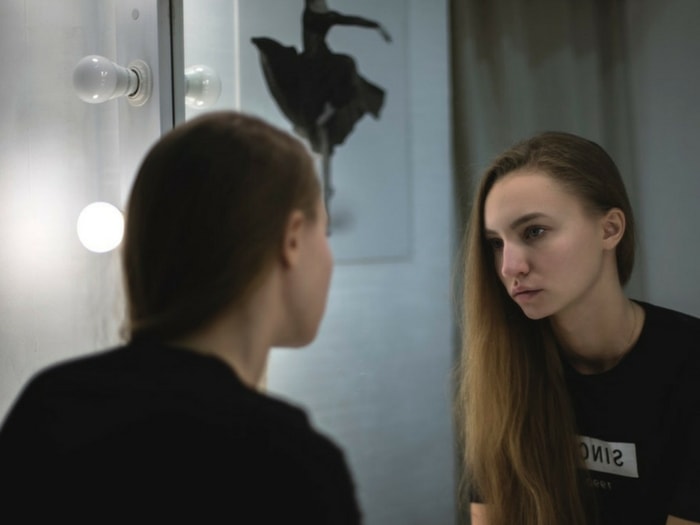
My mother’s soul was free, but that didn’t mean we were no longer connected. She was part of the woman I had become and could be found in my gestures and features, my laughter and tears. In my reluctance to move forward, I failed to recognize her whenever I looked in the mirror.
ARTICLE AUTHOR: Tara Lynn Marta holds a BA in English from Penn State University, and she is currently working on her MA in Creative Writing at Wilkes University. Tara has been published by Aaduna, Inc., The Gorge, PoetrySoup, and The Humor Times. She is a book reviewer for At the Inkwell as well as a contributing blogger for the American Writers Museum.
It has been almost three years since the death of my mother. I fumble through day after day of waking up pretending I am okay living without her. Yet, the truth is I lie every single day to myself with affirmations like “death is a part of life, she is in a better place, and she is no longer suffering”. You can rattle off all the inspirational quotes to me and my reaction is the same. I will never be the same person I was before July 21, 2013.
How can I? The reminder she is gone is constant. There are days the emptiness inside of me is more of a background noise, and then there are the days where it leaves me feeling crippled, helpless, lost and really mad.
So very mad my Mom has died
I selfishly sulk, saying over and over in my head how “NOT FAIR” it is that she was taken so young. How my boys, who loved their Grandma, were robbed of her quirky, hilarious personality. My mom filled every room with smiles and a no-nonsense attitude.
My Mom was the center of my universe. She was a single Mom that raised three girls on her own with the help of my grandparents. We were in every sense of the word a dysfunctional family, but at the end of the day we knew we had each other. I knew no matter what my Mom would be there for me, and I would be there for her.
My Mom was exceptional at loving.
Breast cancer did not define her. She fought really hard the last four years of her life trying to outlive the death sentence of being Stage 4.
This next part of my story is hard. It is hard for me to write, but harder for me to share because I can’t get past the pain I feel for experiencing all I did, and the guilt of feeling that I could have done more.
It was Tuesday, July 16th 2013 when my Mom was discharged from the hospital and we were set up by her doctors to have hospice care come in to make her comfortable. The doctors and my Mom knew the end was coming. I was still not ready to accept reality.
The day before my Mom came home from the hospital, my baby sister and I decorated the bedroom she would eventually spend her last days in. We filled it with all of my Moms favorite items and paintings. My Moms face lit up when she walked in and saw what we did.
When the hospice nurse arrive she gave me very detailed instructions on how to administer the drugs that would evidentially help aide my Mother’s body in dying. I was the only one to administer them because I was her health care proxy.
My sister and I had no idea we only had less than 48 hours with my Mom once I started administering the drugs. Thursday, July 19th my mom’s last words to me were she was thirsty.
My family kept saying over and over again for me to step away, to take a break. But I insisted how I wanted to be there, how I needed to be there with my Mom during every moment. My sister and I set up a cot next to her hospice bed and we only left her side to go home and shower. I would drive home, spend an hour with the kids and my husband, making sure everything was and then I would give kisses head back to be with my Mom.
Here is the truth of it all, the night before my Mom passed, and I couldn’t do it anymore. I wanted to run away. I couldn’t give her another dose of pills because her jaw was clinched tight; her death rattle was so profound that it echoes in my head to this day. My sister and I were scared. Scared because we couldn’t do anything. Scared because we knew the end was coming.
Seeing death first hand never leaves you, ever.
But knowing you are the one aiding death haunts you. Forever.
It was early morning on Sunday, July 21st, and my sister and I had not slept again. We were making small talk with my Aunt in the kitchen. We decided to all go into Moms room to change the bedding and get her as comfortable as we could.
We all talked to her knowing she could hear us, and we told her we were making her look pretty by cleaning her up. After we were done, my aunt went to start a load of laundry, and my sister ran downstairs for a moment to get something.
As I had done every day, I sat on the cot next to my Mom, with her hand in mine and I was asking her what she wanted to watch on TV. She started to make the familiar moans, where I knew she was in pain, so I turned to her and said “I know Mom it hurts, but it’s not time for your meds yet”. I leaned in close to her, kissed her cheek, and then whispered in her ear “it is okay Mom; you know we love you, but you can go with Nanny and Poppy now. We will be okay.”
I didn’t mean it.
I knew I was not going to be okay. But I knew my Mom was done fighting. Cancer had ripped her down to the bone. She needed to be free from the pain.
I watched her gasp for air one last time as I held her hand. It was if she was going to get up and say something, but it was the last gasp of air she took before I felt her leave. I felt my Mom leave her body.
I knew she was finally free of what Cancer did to her. And for a moment I felt such peace. It was a gift she gave me, because she knew I was there until the end with her, she knew I wanted to be there. She knew my sister or my aunt did not. They both left the room because it was how it was suppose to be. My mom was supposed to pass with just me in the room. There is such purity in my heart for that last moment with her. It is what calms my demons when I get so mad that she is gone.
My Aunt and Sister both ran into the room seconds after she past and said she is gone right? She is gone? They felt her leave too.
I just nodded and we all fell apart.
It was as if her body went cold and hard within seconds. I put my head on her chest and held her hand until my sister had me get up. We both couldn’t believe she was gone.
My sister and my Aunt are the only two people who were there for those last days. They know the horror I replay in my mind. It is not what I choose to replay. Those are not the memories that flash through my mind when I think of the amazing women my mother was. The images that haunt me are only in my nightmares.
The guilt I carry that I could have done more to help her strangles me at times. That I hurt her because I was the one that gave her the medicine that shut her body down and killed her.
Life is life, and I understand our bodies are just a temporary place until we cross over. I cannot tell you the countless times I have heard “you knew this was coming, you can’t be shocked”. We knew at some point cancer would rip my mother from life. And I am in awe of people that handle death with grace and ease. They are stronger than I am.
There is no way to measure the toll my Moms death has taken on me. I thought I would be able to slap a smile on my face and move on and hide my pain. That only made my depression get deeper. My guilt stronger. Hiding what I was going through crippled me and crippled my rational thinking. It changed me.
Yet no one saw it.
No one saw it because I kept those closest to me far, far away from me. I blocked them all from knowing how I was falling apart. I wedged bridges between lifelong friends because it was easier than dealing with who I was now.
I was an optimist that lost all hope.
I lost me when my Mom died. She was so much a part of my everyday life. I spoke to my mom more than three times a day. I saw her at least four to five times a week. If we were not running around to doctors, or hospitals, my mom was at a ball game cheering on my kids or doing something with her 5 other grandkids.
My Mom never stopped living, no matter how hard cancer tried to make her stop.
I didn’t know how to live without her and I had the easy part. I was only her cheerleader. I held her hand during chemo, or transfusions. I was not the one going through it. I was not strong. I was there for her, to make her laugh, to distract her from the cancer. And that part I did well, I never let my know how I cried knowing how I saw her suffer. I never cried because I knew she was being strong for me, and the least I could do was be strong for her.
The reason why I chose to share my story is not for sympathy. Not for empathy. Not for the “time heals all wounds” encouragement. It is for others that think they are drowning in their own private sorrow after losing someone so close to them that they need to reach out to a friend or someone they love before it’s too late.
I didn’t.
I don’t blame anyone but me.
I lost touch with so many friends because I shut down so hard on what was real in my life and hurt so many people along the way.
Almost three years later what have I learned?
That cancers sucks, but my Mom fought until the end. Her strength gave me the tools to constantly pick myself up, dust myself off and deal with life. No matter what.
And more importantly, I have learned that I miss my mom so much.
I miss her sense of humor. I miss how exceptionally loved I always felt around her.
Read the story “Alice’s Law” the story of what Lauren Muscarella learns about life & death following the death of her mother. http://www.traumatoart.org/our-book/
Healing our broken hearts from our losses is difficult and I think it takes time and it takes work on our part. We don’t just get over grief to all of sudden become whole with our life again, it is a process and when we are actively grieving meaning that we acknowledge our loss, experience the pain and sorrow and all that goes along with that and we mourn.
Part of the grieving process is learning who we are and how our life has changed without the physical presence of our loved ones. This varies with the significance of the loss. For example when we lose a spouse, now we must learn to live life without a partner. There will be many things that are be different and will requires some change to our life. We may not want to deal with those changes immediately because we need time to mourn the physical loss, perhaps the primary income supporter and the myriad of other things physical and emotional.
So many people ask me “When will I feel better?” Here are some signs that you are healing:
You allow for times of joy, even if there is still sadness
By living in the present more than the past
By believing life is worth living
You want to be social again with family & friends
You allow yourself to laugh and have fun without guilt
Healing does not mean you have forgotten your loved one nor does it mean you are not honoring their memory. It means as long as you are still living, you have a desire to keep living! I often ask people what their loved one would have wanted for them and the answer always is positive, they would want you to happy and keep living ! Healing requires you to have a positive attitude toward living, to push through even when you just want to go back to bed and cry.
Death has truly taught me much about life. Before losing my Mom and then my husband in the same year, I went on about my life not thinking much about the end of it. Oh, my Mom was ill but even then I didn’t think too much about her not being around. Then my husband died tragically and even he would infer from time to time that he wasn’t going to die anytime soon and we would have a long life together…we had eleven years.
Recently I read a book called “The Untethered Soul” by Michael Singer. I found it to be a rather heavy thinking spiritual read. It delves deep into the soul and teaches us to awaken and release those things that keep us tethered rather than living a life of being present and alive to the life we have.
Singer says “It shouldn’t take death to challenge you to live life at your highest level. Why wait until everything is taken from you before you learn to dig deep inside yourself to reach your highest potential?”
It took me several years before I dug deep inside, before I was willing to look at my life, what was it I wanted and even deeper into what my soul to learn what truly mattered. Of course I missed my Mom, and the life I had built with my husband…but I was not living life at my highest level. I made a decision to change my priorities, I find value in the simplest things like a walk in nature and stopping for ten minutes to listen to the songs of the nearby birds. Oh and work – it’s what I do to make money, but now I prioritize my time spend it with those people still living. I never, never put off a call or meeting with someone I love that I can do today.
Singer also said, “Imagine if you knew you were going to die within a week or a month. How would you change things? How would your priorities change? How would your thoughts change? What are you doing with life? That is what death asks you.”
I’ve had many years now to understand how the deaths of people I loved have been my teacher and how will I choose to LIVE the rest of my life. I am still learning and growing and this path of self discovery continues to open my mind and heart to love and blessings.
How about you, please share in the comments below how death has been your teacher. – JoAnne
“Compassion is an amazing trait you learn when you grieve” thoughts shared in this story of death, grief and the experience of a deep dark well.
Living in the Bottom of a Well
By Sheri Hall
Sheri & baby Lily
You look up you see a small circle of light-it is the way out. It is seemingly far away but closer than you think. It is very small; you do not want to look up. You look around at the stone walls that surround you, most would feel claustrophobic but not you. Here is where you can be you. Here is where you can feel sad, look sad, be sad without those around you being uncomfortable. The ones that see you down there might stop and yell. Are you ok? Or how are you? But they don’t want to hear the answer- so you tell them what they want to hear- I’m ok or I’m fine and they go on their way. Some bring you flowers and place them nicely in a circle around your well, this cheers them up, and this makes them feel like they are being sympathetic. Why flowers? Is it my birthday? Are we celebrating something? They look nice so now when you walk by my well, with me hiding in the bottom curled in a ball, not daring to look up. You do not feel so sad because you see all the beautiful flowers and think -Wow look at how many people care! That makes them feel better- those flowers do not cheer me up, I am not celebrating my childs death, when the flowers die I must throw them away, it is a task I cannot do nor want to do.
I look around at my hole I have been thrown down; I do not want to climb out. Here I am comforted by my pain. Here I am not pretending. Here I am me.
No one wants to go down a well; you may not be able to get out! But when you lose a child, when you hold them in your arms as they die, you fall down that well, at some point you wake up. You realize what has happened, it may be weeks, months or days, but it hits you like a brick, you are stuck at the bottom of this deep dark well. It echoes your cries, as well as your tears that fall to the cement floor like bombs. You re-live the most painful of memories down there. You want every one to stay out! This is not a problem since no one wants to join you down there; no one wants to see that pain. People tend to look at grief & tragedy as though-What if that happened to me? They are not thinking of your pain. They want to cheer you up- they want to cook for you- which is very nice, but hard when you do not taste anything let alone want to eat. You shove the food in your freezer, you say thank you, and they feel better & go on their way. People say things like -I didn’t want to upset you, as though not mentioning it means you are not thinking about it. I have come to realize this society doesn’t cope well with death, everyone wants to acknowledge it once then for it to go away, some do not say anything at all to pretend like nothing happened, those are the selfish people. I have seen how I have become invisible to some or perhaps they don’t want to see me? Because they do not want to think about what happened to me. Some people think negativity breeds negativity- that could not be farther from the truth. Yes negative people are not fun to be around, but negative or more accurately -a tragedy is not caused by anything. It is life. Life is full of suffering, we all suffer at different times in life & how we deal with other people suffering really shows our true character. The best is to ask a person that is grieving about the person that died, because they do want to talk about them, they want you not to feel uncomfortable when they are being sad- because it is ok to be sad. Unfortunately we live in a world that prefers fake realities & big smiles over having to deal with or accept our feelings & hurts. So we simply do not talk about it. We cheer you up we bring you flowers.
If we were able to grieve without being concerned of making others uncomfortable with our sadness, without being so concerned what we look like then maybe we would not feel like we were stuck in the bottom of a well. One day I will climb out to face the world. One day we all climb out. And one day when I walk past someone else stuck in a well I will join them, and help them cry because it is ok to be sad. All we can do is to learn how to be -How to be ourselves, how to be there for others. Compassion is an amazing trait that you learn when you grieve.
 Tara Lynn Marta holds a BA in English from Penn State University, and she is currently working on her MA in Creative Writing at Wilkes University. Tara has been published by Aaduna, Inc., The Gorge, PoetrySoup, and The Humor Times. She is a book reviewer for At the Inkwell as well as a contributing blogger for the American Writers Museum.


